 |
 |
 |

|
|
|
||
|
||||
|
|
|||
|
||||
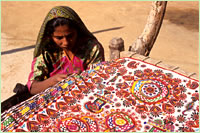
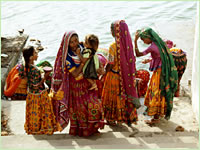
Gujarat is the centre for some of India’s most exquisite handiwork. Kutch is known for its fabulous embroideries done in a variety of techniques developed by different communities including Hindu and Muslim pastoral groups whose women do embroidery for their trousseau or a second income as well as migrants from Sindh. Bandhani tie-and-dye is almost synonymous with Gujarat, which also produces fine handloom woven textiles and block-printed fabrics. Rare crafts that make their last stand in Gujarat include the double ikat Patola weaving of Patan and the Rogan painting on fabric done in Nirona village. While hand-embellished textiles are a bedrock of the rural economy of Kutch and Surendranagar districts of Gujarat, these regions have equally fine terra cotta, metal and wood crafts.
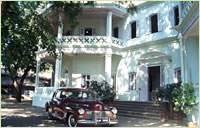
Arrive at Ahmedabad. Ahmedabad is a major centre of traditional and contemporary textiles, and many crafts thrive here like Mata-ni-pachedi narrative cloth paintings and block-printing. Stay at House of Mangaldas Girdhardas, a heritage hotel owned by a former textile industrialist family. Day-2: AHMEDABAD Visit the Calico Museum of Textiles, one of India’s leading specialized museums. The collections include textile swatches of Indian origin found at archaeological sites of Egypt, silk sarees from across India, double-ikat silk sarongs made in Patan for the Indonesian market, chintz and curtains made from Dutch, British and Portuguese colonial powers in Gujarat, floral embroidery from Punjab, shawls from Kashmir, 18th century tie-and-dye, richly embroidered Mughal tent of Shah Jahan whose palace is nearby, royal wardrobes of Rajasthan, cloth paintings and manuscripts, religious narrative cloth paintings like Pichwais and Kalamkaris, etc. Also visit the other museums of Ahmedabad strong on folk art collections. Day-3: AHMEDABAD –GONDAL
(251km) Drive to Gondal, a princely town of considerable importance and affluence. Visit the 1748 AD Naulakha Palace which houses the erstwhile ruling family’s private collection of beadwork, textiles, brassware, hand-painted toys and silver crafts, the centre promoting weaving at Gondal, and the historic buildings of Gondal. Evening visit to Khadi Plaza, one of Gujarat’s major handloom weaving units. Stay at Riverside Palace/Orchard Palace, both of which are decorated with textiles from the former Maharanis’ collections. Day-4: GONDAL – JETPUR – JUNAGADH – GONDAL (150 km total) Drive to Jetpur, known for its screen and block
printing workshops, and a yarn-dyeing centre, and then to Junagadh
where you can see gem-encrusted carpets, wardrobes and tapestery
of the Nawab at the museums. A historic city, Junagadh has 3rd century
BC Buddhist relics, medieval fort, mausoleum complexes, palaces,
etc. Day-5: GONDAL –BHUJ
(259km) Drive to Bhuj calling in on the way at Rajkot to see the Watson Museum which has good examples of Gujarat’s craftsmanship skills, and Rashtriya Shala working to revive hand-weaving. Stay at Hotel Prince. Day-6: VILLAGES AROUND BHUJ Visit villages around Bhuj known for their distinctive styles of embroidery and other handiwork like weaving, block-printing, rogan-painting, etc. Stay as on day-6 OR at Shaam-e-Sarhad, a rural resort. Day-7 BHUJ – MANDVI (60km) Drive to Mandvi, which is a tie-and-dye centre, and stay in a/c tented comfort of the royal resort by the private beach in the palace estate. Visit the dhow-building yard to see ocean-worthy vessels being hand-built. Stay at the palace estate. Day-8 AROUND MANDVI Visit villages near Mandvi known for their picturesque houses called bhungas and Rabari embroidery. Stay as on day-8: Day-9 MANDVI-WADHWAN (310km) Drive from Mandvi to Wadhwan. This historic walled town is a centre for bandhani tie-and-dye, weaving and metalcrafts. Stay at Rajmahal, the palace hotel of Wadhwan which has beautiful tapestries. DAY-10: WADHWAN - DASADA
(73km) At Dasada, watch Rabari women at work on their distinct embroideries. Evening safari in the Little Rann of Kutch. Stay at Rann Riders, an eco-resort designed using local materials and handicrafts to resemble a village. Day-11: DASADA-PATAN – DASADA Morning safari in the Little Rann of Kutch. Day trip to Patan to watch the Salvis at work on the Patola, one of the richest silk textiles in the world, woven using the rare double-ikat technique. You will also see 11th century monuments at Modhera’s Sun Temple complex and in Patan. Return to Rann Riders at Dasada. Day-12: Return to Ahmedabad
(90km) or proceed to Rajasthan. |
||||
|
||||
|
|
|||
|
||||
|
||||

 |
 |